Place
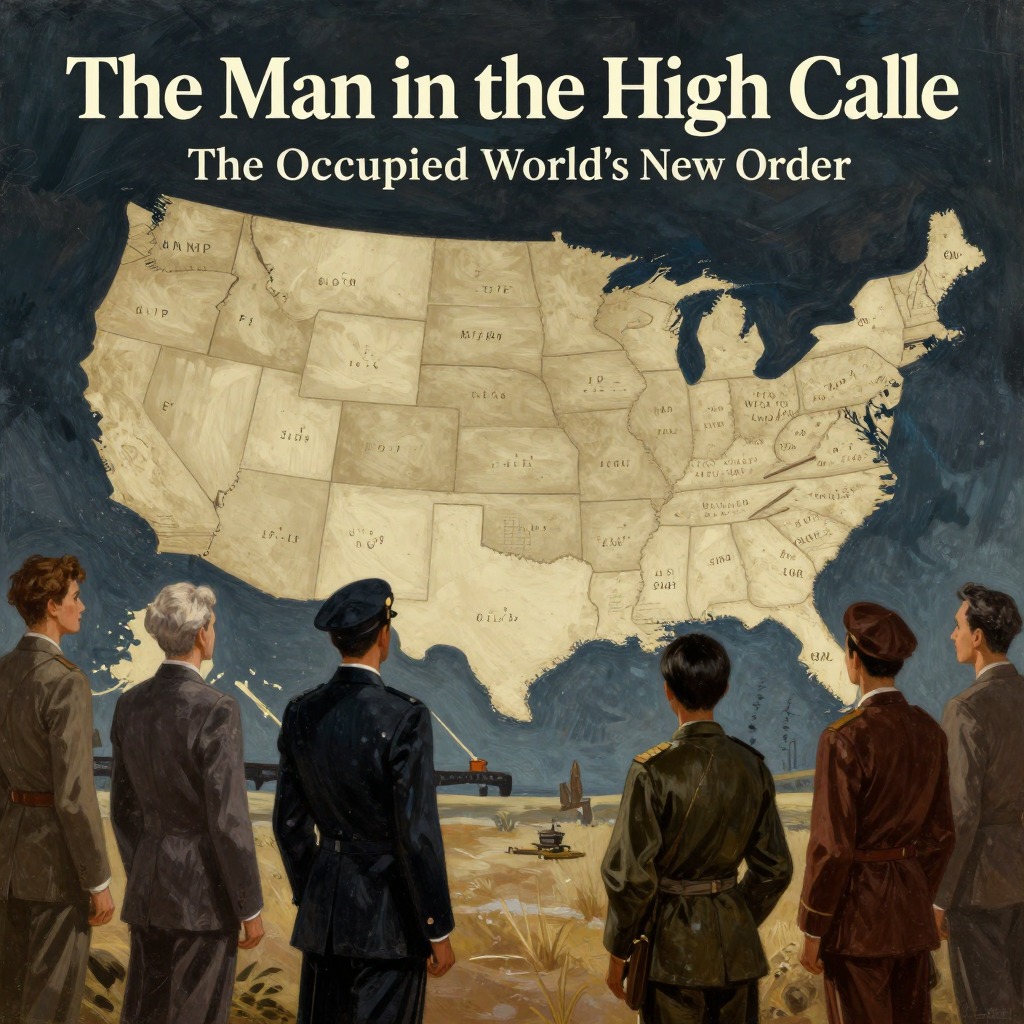
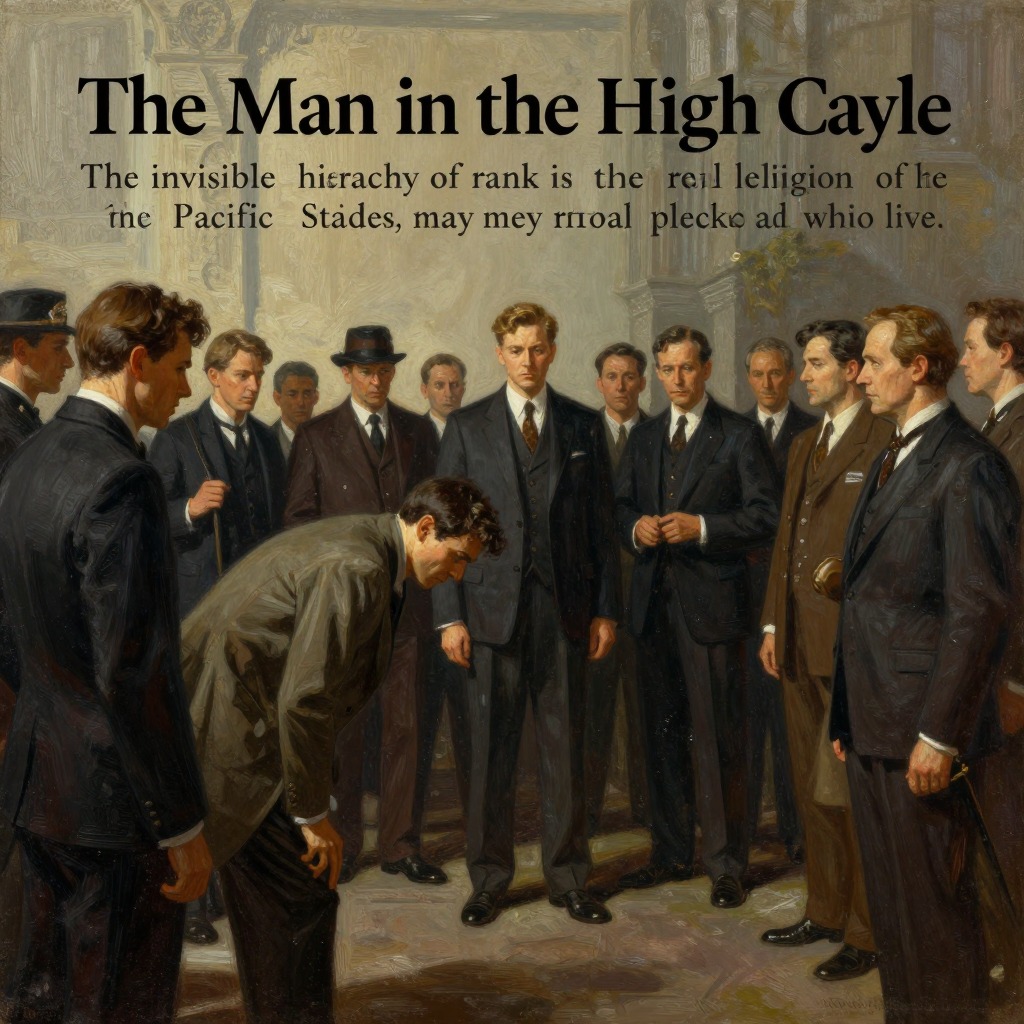
Place is the invisible but omnipresent social hierarchy that structures life in the Pacific States of America, the Japanese-occupied western portion of the former United States. It is a system of rank and status, determined by race and nationality, that places the Japanese conquerors at the top and the white American "yanks" at the bottom, with the Chinese and other minorities even lower. Place is not merely a matter of formal law but a pervasive code of conduct, enforced through daily gestures of deference, humiliation, and the constant threat of violence. It is the novel's central social fact, shaping the identities, aspirations, and torments of its characters, and its eventual questioning forms a key part of the book's thematic core.
The Mechanics of Place
Place operates through a rigid etiquette that governs every interaction between the Japanese and the white Americans. Robert Childan, the owner of American Artistic Handcrafts Inc., is acutely aware of this code. When the Japanese official Mr. Tagomi deliberately mispronounces his name as "Chil_dan_", Childan feels the "dreadful mortification of their situation" and his "aspirations and fears and torments" rise up and swamp him. The insult is a calculated reminder of his subordinate status, a "place pulled" that exposes his helplessness. Childan's internal monologue reveals the constant calculation required to navigate this system: he must bow to any Japanese, even if it means bowing hundreds of times, while treating the "pinocs" (the puppet white government officials) with a studied indifference, bowing but looking straight through them. He must also be careful not to let a slave see him carrying his own bags, for that would be a catastrophic loss of face. The system extends to the most mundane details of life, from the pedecab ride where being pulled by a Chinese driver gives Childan a momentary feeling of "higher place," to the necessity of using a porter to carry his luggage into the Nippon Times Building.
The hierarchy is not simply binary; it is a finely graded scale. Childan, as a white man, occupies a middle position, above the Chinese and the black slaves but far below the Japanese. He is acutely conscious of this, and his interactions with the Kasouras, a young Japanese couple, reveal the deep ambivalence of his position. He is thrilled to be invited to their apartment for dinner, seeing it as a chance to be accepted "as a man rather than him as a yank or, at best, a tradesman who sold art objects." Yet his own prejudices and resentments surface, and he reflects that "only the white races endowed with creativity," while the Japanese are merely imitators. This internal conflict—between his desire for acceptance and his belief in his own racial superiority—is a direct consequence of the Place system, which forces him to suppress his true feelings and perform a role of deference.
Place and the Individual
Place is not just an external constraint; it becomes internalized, shaping the characters' sense of self-worth and their hopes for the future. Frank Frink, a Jewish man who has changed his name from Fink, is acutely aware of his precarious position. He knows that if he leaves Japanese-controlled territory and goes to the South or Europe, he would be subject to the Reich's racial laws and likely killed. He reflects that "it'd be death for me if I left Japanese-controlled land and showed up in the South or in Europe—anywhere in the Reich." His fear of being blacklisted by his employer, Wyndam-Matson, is not just about losing his job but about losing his place in society, which would make him vulnerable to deportation and extermination. The novel shows how Place is tied to survival itself, especially for those who are doubly marginalized, like Frink as a Jew.
For Childan, Place is also a source of constant anxiety. He is obsessed with his reputation and his standing among his Japanese customers. When he is confronted by a man claiming to be Admiral Harusha's gentleman, who exposes a Colt .44 revolver as a fake, Childan's world collapses. He thinks, "I have lost place. I cannot go on; that is a fact." The loss of a sale is not just a financial blow; it is a loss of status, a confirmation of his inadequacy in the eyes of his conquerors. His subsequent investigation into the forgery reveals the fragility of the entire system of authenticity on which his business—and his identity—depends.
The Subversion of Place
The novel also explores ways in which Place can be subverted or transcended. Wyndam-Matson, the factory owner who profits from forging historical artifacts, offers a cynical critique of the very concept of historicity that underpins the Japanese collectors' obsession. He demonstrates with two Zippo lighters, one supposedly from Franklin D. Roosevelt's pocket, that there is no "mystical plasmic presence" or "aura" that distinguishes the authentic from the fake. "It's all a big racket," he says, "they're playing it on themselves." This suggests that the value the Japanese place on American artifacts is a constructed fiction, a projection of their own desires, and that Place itself is similarly arbitrary.
More significantly, the novel suggests that the younger generation of Japanese, like the Kasouras, may be less invested in the Place system. Childan observes that these "new young people, of the rising generation, who did not remember the days before the war or even the war itself—they were the hope of the world. Place difference did not have the significance for them." This hope is embodied in the Edfrank jewelry, the original contemporary American art that Childan begins to sell. When Paul Kasoura examines one of the pieces, he is moved by its "wu," a quality that transcends historicity and Place. He tells Childan that the piece "partakes of Tao" and that it is "authentically a new thing on the face of the world." This moment suggests that there is a realm of value beyond the social hierarchy, a realm of pure creativity and spiritual significance that can unite people across the divisions of Place.
The Failure of Place
Ultimately, the novel suggests that Place is a failed system, one that cannot provide genuine meaning or satisfaction. Mr. Tagomi, the Japanese official who is himself a high-ranking figure in the hierarchy, experiences a profound crisis when he is forced to kill two SD men who attack his office. He is overwhelmed by guilt and horror, and he reflects that "evil is not a view" but "an ingredient in us. In the world." His subsequent attempt to find solace in a piece of Edfrank jewelry, the silver triangle, leads to a mystical experience in which he perceives the object as a microcosm of the universe, a union of yin and yang. But the experience is interrupted, and he is left feeling lost and disoriented. His heart attack, which occurs after he confronts the German consul, seems to be a physical manifestation of his spiritual crisis. He realizes that his career is over, and he reflects that "the war, Operation Dandelion, will sweep us all away." Place, in the end, is revealed as a fragile and ultimately meaningless construct in the face of larger historical forces and the fundamental questions of human existence.
In the novel's final chapter, Juliana Frink's visit to Hawthorne Abendsen, the author of The Grasshopper Lies Heavy, offers a glimpse of a world beyond Place. Abendsen's book, which imagines an Allied victory, is a powerful act of subversion, and Juliana's journey to warn him of an assassination plot is a personal rebellion against the system. When she confronts Abendsen with the truth that his book was written by the I Ching, she is asserting that there is a higher truth than the official narrative of the Axis victory. The novel ends with her walking away from the Abendsen house, having delivered her warning and having found a new sense of purpose. She has transcended Place, at least momentarily, by acting on her own moral convictions. The novel thus leaves open the possibility that Place, like the false historicity of the artifacts, can be overcome by a deeper understanding of reality and by the courage to act on that understanding.